Care can be delayed.
The Texas Attorney General cited a case where denials allegedly delayed a newborn's transfer to a hospital that could provide the urgent care the baby needed.
Emergency ambulance coverage in Texas
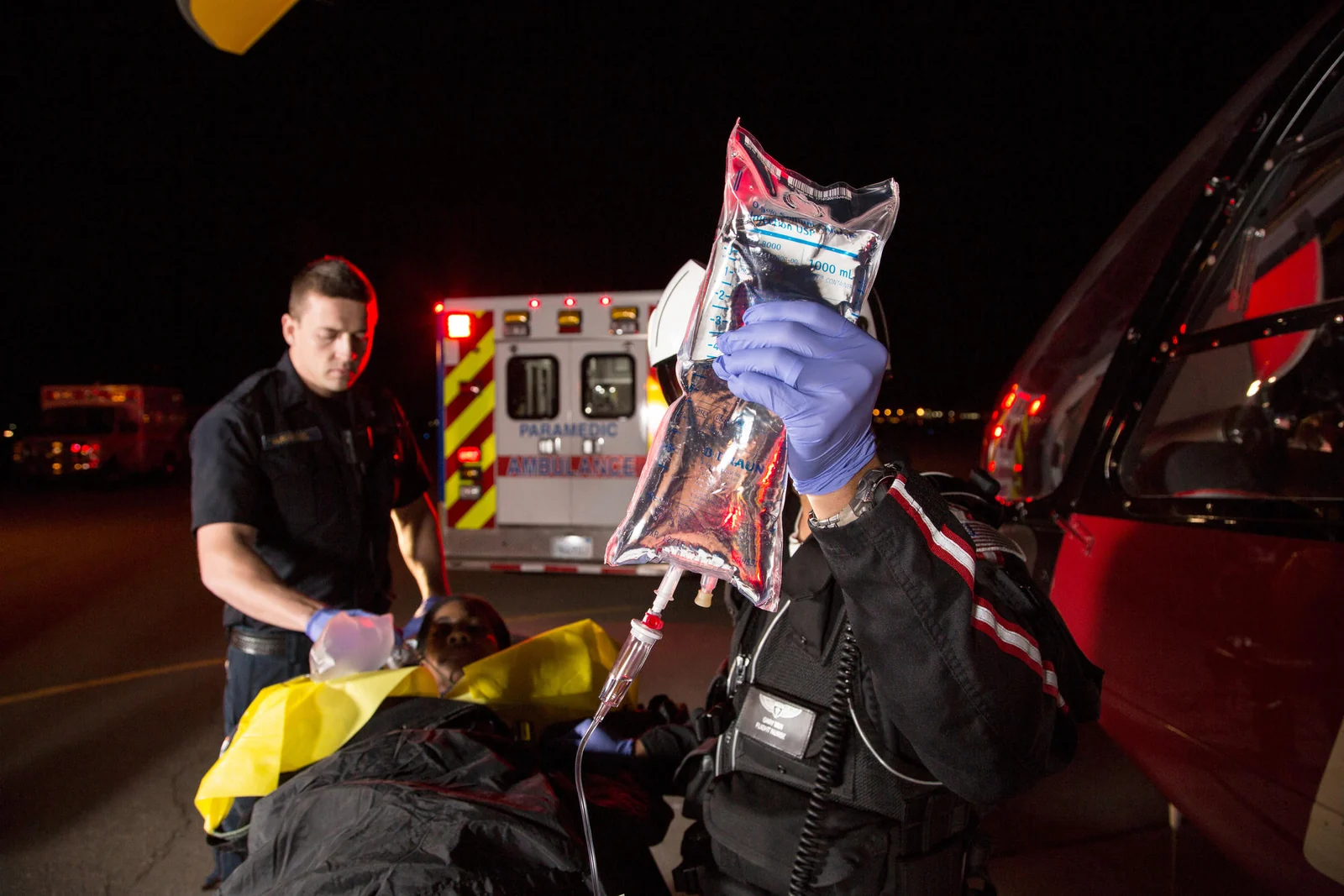
In an emergency, you don't get to choose where it happens, who responds, or what care you need. First responders and emergency doctors make those decisions in minutes, based on what you need at the time.
Weeks or months later, some Texans are opening a letter from their health insurer saying that emergency care wasn't "medically necessary." That one phrase can leave a family responsible for the entire bill.
Opens the Texas Attorney General's Consumer Complaint Portal in a new tab.
The issue
Since January 2025, Blue Cross Blue Shield of Texas (BCBSTX) has used a company called Alacura to review ambulance claims. Alacura doesn't treat patients. It reviews medical charts after the fact and recommends whether your insurer should pay.
Since that change, a rising number of Texas families have been faced with a second emergency, when BCBSTX denies to pay for their care by air or ground ambulance. For Texans, that means:
The Texas Attorney General cited a case where denials allegedly delayed a newborn's transfer to a hospital that could provide the urgent care the baby needed.
The No Surprises Act protects you from many surprise bills when your insurer underpays. But when your insurer denies the claim outright, those protections may not apply, and you could owe the full cost of your emergency care.
Between February and July 2026, payment was withheld on nearly 3,700 Texas ground ambulance transports representing approximately $4.3 million. In one emergency pregnancy case, the appeals process lasted 17 months before the claim was paid.
In much of the state, the nearest stroke, heart or trauma center is 80 to 100 miles away or more. An air ambulance can be the only way to get there in time, but Alacura automatically denies this care if it originates from a hospital.
Paying premiums every month and then being denied payment when it matters most leaves patients without the protection they paid for. We believe these decisions should be made by looking at the patient who needed help in that moment, not at a chart or Google Maps weeks later.
Under investigation
On Sept. 28, 2026, the Attorney General's office announced an investigation into BCBSTX, its parent company Health Care Service Corporation (HCSC), and their related businesses. The investigation is looking at how the company denies and delays urgent, medically necessary care, including whether claims are denied without adequate review. The Attorney General's office has issued a formal demand for information as part of the investigation.
File a complaint
Patients first
Texans experiencing serious, time-sensitive medical emergencies may be located far from hospitals that can provide the care they need—sometimes as far as 100 miles away. Some of them were even at local hospitals where their doctors determined they needed to get to other hospitals that could provide that care quickly and ordered ambulance transport. But after the patients had been treated and transported, BCBSTX and Alacura decided that care was not medically necessary.
If your claim is denied
You have the right to appeal the decision, and your ambulance provider may be able to appeal on your behalf if you authorize it.
If you believe emergency care was delayed, denied, or improperly restricted by your health insurer, you may file a complaint with the Texas Attorney General's Consumer Protection Division.
Your coverage matters
Month after month, you paid your premiums, expecting your care would be covered in an emergency. When that emergency came and a medical professional directed your care, your insurer should have been there. If your claim was denied, speak up for the coverage you paid for.
Opens the Texas Attorney General's Consumer Complaint Portal in a new tab.
Helpful answers
No. Alacura is a company BCBSTX hired to review ambulance claims. Your insurer makes the final decision on whether to pay.
No. Alacura also operates with other Blue Plans around the country.
No. Consumers should be worried about any company that tries to downgrade care or relitigate medical necessity after that care is delivered.
No. Patients have also experienced denials for ground ambulance care, including 911 responses.
The No Surprises Act protects you from most surprise bills for air ambulance when your insurer pays. But if your insurer denies the claim entirely stating that there is no coverage like a medical necessity denial, those protections may not apply, and you could owe the full cost.
Ambulance providers respond when they are called to provide emergency care. In hospital-to-hospital transfers, the patient's medical team has already determined that the patient needs a higher level of care that is not available where they are and has identified an appropriate hospital that can provide it. The ambulance provider's role is to safely care for and transport the patient based on that request and the patient's medical needs.